
 Facebook
 X
X LinkedIn
 Forward
Session 3: Advanced Applications of Behavior Change: Case Conceptualization and Collaborative Problem-Solving for High-Risk Students
This workshop is designed to deepen educators’ and community/school mental health providers’ understanding of how to influence behavior change, for “high-risk” students, through applied case conceptualization and collaborative problem-solving. Emphasis will be on students who have experienced adverse childhood events/trauma, neurodiversity (e.g., ADHD, autism spectrum disorders, or learning disabilities), mental health disorders (e.g., anxiety, depression), and/or school avoidance.
Building on the principles introduced in Session 1 (From Clinics to Classrooms), this session focuses on case presentation and analysis to illustrate how behavior change strategies can be effectively implemented across settings. Attendance at Session 1 is helpful but not required; participants may attend this session independently.
A structured case conceptualization model will be introduced to guide assessment, intervention planning, and decision-making. We will explore the art of consulting and motivating behavioral change amongst students, providers, educators, and caregivers, while highlighting clear “to-dos” and “to-don’ts” for effectively collaborating, building generalization, and sustaining gains.
Participants are strongly encouraged to bring their own cases for discussion, application, and problem-solving, making this a highly interactive session focused on refining clinical judgment, consultation and instructional skills, and advanced application of behavior change principles.
Instructional Method and Credit/Time Calculation:
Didactic lecture, large‑group discussion, case examples, and Q&A
CE Credit
8.0 APA CE Credits available for attending all sessions (8:30 AM -12:35 PM)
APA CE credit is calculated based on one credit per 60 minutes of instructional time, excluding breaks.
Psychology CE Credit Statement
The Medical College of Wisconsin is approved by the American Psychological Association to sponsor continuing education for psychologists. The Medical College of Wisconsin maintains responsibility for this program and its content.
This activity contains content or processes that may be potentially stressful.
MCW's Psychology Continuing Education Grievance Policy MCW OCPD maintains a written grievance policy for continuing education activities. For questions or concerns about this program, please contact [email protected]. Grievances will be reviewed and addressed promptly.

Target Audience
This program is designed for licensed psychologists and other behavioral health professionals with an interest in deepening educators’ and community/school mental health providers’ understanding of how to influence behavior change, for “high-risk” students, through applied case conceptualization and collaborative problem-solving.
- Physicians
- Nurse Practitioners
- Physician Assistants
- Nurses
- Pharmacists
- Psychologists
- Social Workers
- Psychiatry Residents
- Medical Students
- Allied Health Professionals
- School Social Workers
- School Psychologists
- School Counselors
- School Administrators
Instructional level: Introductory and Intermediate
Learning Objectives
- Apply a structured case conceptualization model to assess the needs of high-risk students and guide intervention planning and decision-making across clinical, educational, and home settings
- Analyze case examples to evaluate the effectiveness of behavior change strategies and adapt interventions for implementation across multiple environments
- Apply strategies for motivating and supporting behavior change among educators, caregivers, and interdisciplinary teams, including identifying common barriers, “pitfalls”, and solutions
- Refine clinical and instructional decision-making skills by collaboratively problem-solving participant-submitted cases using advanced behavior change principles and evidence-based practices
Course summary
- 8.00 AMA PRA Category 1 Credit(s)™AMA PRA Category 1 Credit(s)™
- 8.00 APAAPA credit.
- 8.00 Hours of ParticipationHours of Participation credit.
- 8.00 NASW
- 8.00 NP Contact Hours
- 8.00 PAPA credit.
Thursday:
- Adopting and Utilizing a Case Conceptualization Model
- Detecting Antecedent Patches and Unaccommodating Accommodations
- Fostering Independence via Individual Independence Plans (IIPs)
- Techniques for Motivating Change Among Students, Educators, and Caregivers
- Strategies for Increasing Child-Driven Goal Attainment
- Setting Up for Success – Establishing Appropriate Goals
- Collaborative Case Analyses for High-Risk Profiles (ADHD, Autism, depressed, anxious)
Friday:
- The Art of Consulting “To Dos” and “To Don’ts”
- Strategies and Techniques for Increasing Flexible-, Positive, and Social-Thinking Skills
- Strategies and Tools for Supporting Students in the Least Restrictive Environment
- Measuring Success – Establishing Doable Data Collection Methods
- Anticipating and Overcoming Barriers
- Participant Case Presentations and Analysis
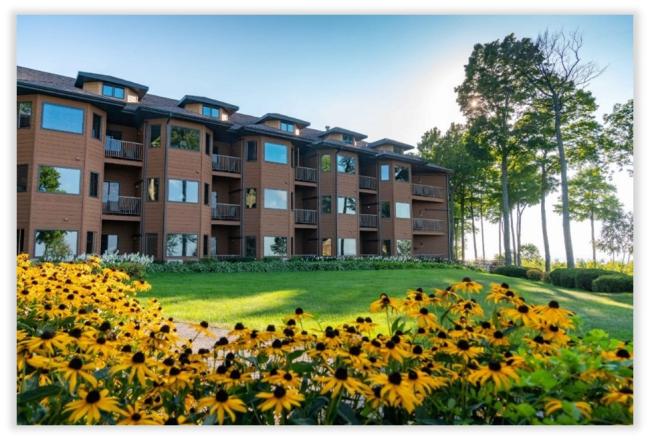
Lodging in July and August is in great demand; you must make reservations early. A block of suites has been set aside at the Landmark Resort. These suites will be held until June 5th, 2026, or until they are filled.
From its site on the bluff, the Landmark offers outstanding views of the waters of Green Bay with 294 units comprised of 1, 2, and 3-bedroom suites. Facilities include the Carrington Pub and Grill, 1 indoor and 3 outdoor pools, 2 tennis courts, whirlpools, steam rooms, and a fitness center and game room. The Landmark Resort is Door County’s largest and best full-service facility.
The Landmark Resort
4929 Landmark Drive
Egg Harbor, Wisconsin 54209
Reservations: (800) 273-7877
http://www.thelandmarkresort.com
To book through our discounted group rate, please call the Landmark reservation line at (800) 273-7877 and state that you are attending the Door County Summer Institute. No group code is required.
Group rates cannot be booked online.
Disclosure
Consistent with ACCME policy, faculty for all MCW continuing education programs must disclose all relevant financial relationships with commercial organizations. MCW has a mechanism in place to identify and resolve conflicts in advance of the DCSI.
David Meichenbaum, PhD, is a New York State licensed clinical psychologist specializing in the diagnostic evaluation and treatment of developmental and mental health disorders. For over 20 years, Dr. Meichenbaum has worked at The Summit Center in Amherst, NY, where he is both the Clinical Director of Summit’s Behavioral Pediatrics Clinic and the Director of Community Consulting and Clinical Services. Dr. Meichenbaum is a highly sought-after consultant for school districts, offering practical behavioral and educational strategies that focus on the social, emotional, adaptive, and behavioral development of students with autism spectrum, disruptive behavior, and mental health disorders. As both a clinical psychologist and consultant, Dr. Meichenbaum offers a perspective and solutions to increase the development and generalization of skills across settings. Dr. Meichenbaum graduated with his doctorate in Clinical Psychology from the State University of New York at Buffalo, and he completed his clinical internship at Duke University Medical Center. He is returning to present at the Door County Summer Institute for the third consecutive summer.
Donald Meichenbaum, PhD, is a Distinguished Professor Emeritus from the University of Waterloo in Ontario, Canada. Since his retirement, he has been Research Director of the Melissa Institute for Violence Prevention in Miami (www.melissainstitute.org). Dr. Donald Meichenbaum is one of the founders of Cognitive Behavior Therapy, and in a survey of clinicians he was voted "one of the ten most influential psychotherapists of the 20th century." He has received a Lifetime Achievement Award from the Clinical Division of the American Psychological Association and was Honorary President of the Canadian Psychological Association. Dr. Don Meichenbaum has presented in all 50 U.S. states as well as internationally, and he has published extensively. His latest book is entitled "Roadmap to Resilience".
Activity Director:
Carlyle H Chan, MD
Professor of Psychiatry and
the Institute for Health and Equity-Bioethics and Humanities
Medical College of Wisconsin
Planning Committee Members:
Ellen Leitner, MSW, LCSW
Department of Psychiatry and Behavioral Medicine
Medical College of Wisconsin
Kevin Bozymski, PharmD, BCPS, BCPP
Assistant Professor, Department of Clinical Science
Medical College of Wisconsin School of Pharmacy
Assistant Professor, Department of Psychiatry and Behavioral Medicine
Medical College of Wisconsin
Kylie Lenz, PA-C
Physician Assistant
Department of Psychiatry and Behavioral Medicine
Medical College of Wisconsin
Heather M. Smith, PhD, ABPP
Lead Psychologist
Director of Psychology Training
Milwaukee VA Medical Center
Associate Professor
Department of Psychiatry and Behavioral Medicine
Medical College of Wisconsin
Marisa Stich, APNP
Department of Psychiatry and Behavioral Medicine
Medical College of Wisconsin
In accordance with the ACCME® Standards for Integrity and Independence in Accredited Continuing Education, Standard 3, all persons in control of content must disclose any relevant financial relationships. It is the policy of the Medical College of Wisconsin to identify, mitigate and disclose the absence or presence of all relevant financial relationships with ineligible companies held by the speakers/presenters, authors, planners, and other persons who may influence content of this accredited continuing education. The following in control of content had no relevant financial relationships to disclose.
- Carlyle H Chan
- Ellen Leitner
- Kevin Bozymski
- Kylie Lenz
- Heather M. Smith
- Marisa Stich
- David Meichenbaum
- Donald Meichenbaum
ACCME Accreditation Statement
The Medical College of Wisconsin is accredited by the Accreditation Council for Continuing Medical Education (ACCME) to provide continuing medical education for physicians.
Designation of Credit Statement
The Medical College of Wisconsin designates this live activity for a maximum of 8 AMA PRA Category 1 Credits™. Physicians should claim only the credit commensurate with the extent of their participation in the activity.
Hours of Participation for Allied Health Professionals
The Medical College of Wisconsin designates this live activity for up to 8 hours of participation for continuing education for allied health professionals.
American Academy of Physician Assistants Credit Statement
This activity has been reviewed by the American Academy of Physician Associates Review Panel and is compliant with AAPA CME Criteria. This activity is designated for 8 AAPA Category 1 CME credits. PAs should only claim credit commensurate with the extent of their participation. Approval is valid from 7/20/2026 to 8/7/2026. AAPA reference number: CME-2015202.

National Association of Social Workers
This program is Approved by the National Association of Social Workers (Approval # 886840778-7398) for 8 continuing education contact hours.
American Association of Nurse Practitioners Credit Statement
The Medical College of Wisconsin, Inc. is approved as a provider of nurse practitioner continuing education by the American Association of Nurse Practitioners: AANP Provider Number 150930. This program has been approved for 8 contact hours of continuing education (which includes 0.0 hours of pharmacology).
Available Credit
- 8.00 AMA PRA Category 1 Credit(s)™AMA PRA Category 1 Credit(s)™
- 8.00 APAAPA credit.
- 8.00 Hours of ParticipationHours of Participation credit.
- 8.00 NASW
- 8.00 NP Contact Hours
- 8.00 PAPA credit.
Price
Credit MUST be claimed before November 30, 2026.
We highly encourage you to complete the evaluation and credit steps before leaving on your last day!
Our 2-day sessions are $455. Graduate and medical students and resident physicians will have a discounted rate, so please contact Caimen at [email protected] to inquire about this discount. A $1 fee is added during checkout to cover the PayPal transaction fee.
To receive a refund, the request must be made at least 15 days before the requested session begins, and a $50 cancellation fee will be deducted from the refund amount. If the refund request is received less than 15 days before the session begins, the full registration fee will be forfeited.
PLEASE NOTE! The billing address entered upon checkout must match the billing address on the credit card you will be using to pay for this course. MCW accepts MasterCard, VISA and Discover card. For a more user-friendly registration and payment experience, Google Chrome and Mozilla Firefox are the recommended web browsers.
Registration scams:
Registration for courses managed by MCW Office of Continuing Professional Development can only be completed through our portal at https://ocpe.mcw.edu/. Course registrations made through other sites cannot be honored. MCW Office of Continuing Professional Development is not able to refund fees paid through unaffiliated registration sites, such as eMedEvents.com, MedConfWorld.com, EventEgg.com, and 10times.com. Please report any unauthorized websites or solicitations for registrations to [email protected].
Credit and Attendance
To receive APA credit, participants must:
Attend the session in its entirety (no partial credit is awarded).
Complete the online evaluation and claim credit in the EthosCE portal by November 30, 2026.
Ensure their attendance is recorded per MCW OCPD procedures.